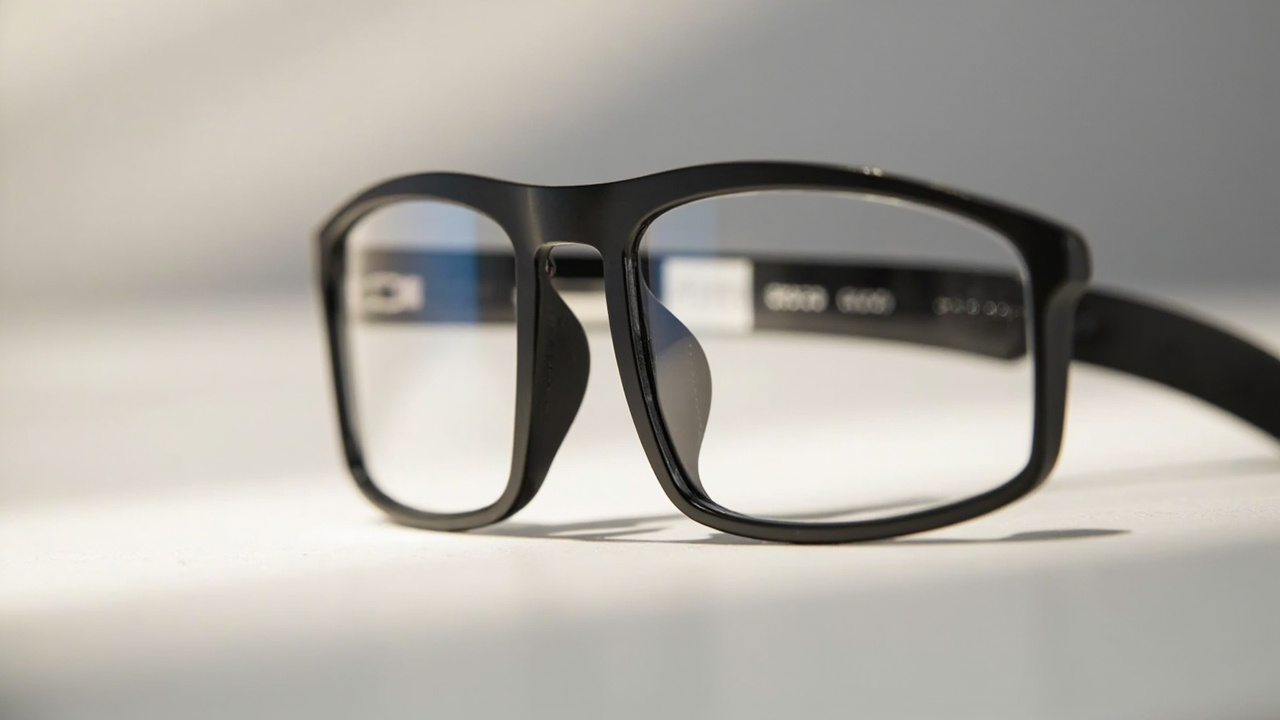
EssilorLuxottica Puts Louder, Clearer Hearing Help Into Normal-Looking Glasses
TL;DR: EssilorLuxottica launched Nuance Audio Plus on Sept. 22, 2026, a second-generation FDA-cleared over-the-counter hearing glasses line with up to 10 hours of battery, stronger amplification and iPhone hands-free calling starting at $829 in the U.S.
EssilorLuxottica, the eyewear company that partnered with Meta for Ray-Ban smart glasses, announced a new version of its Nuance Audio glasses designed to double as discreet over-the-counter hearing aids, according to The Verge. The new Nuance Audio Plus keeps FDA-cleared hearing tech inside temple arms that do not look much thicker than a standard pair of glasses, while adding improved sound boosting, better voice clarity, extra on-device controls and up to 10 hours of battery life.
The launch was described on Sept. 22, 2026, by The Verge and by HearingTracker as the second generation of Nuance Audio hearing glasses for adults with perceived mild-to-moderate hearing loss. Like the first-generation product, Nuance Audio Plus uses open-ear speakers built into the frames' temples, according to HearingTracker. The launch adds hands-free calling and audio streaming for iPhone users, larger speakers, physical controls and more frame choices.
The Nuance Audio Plus is now available in the U.S. in three frame styles and five colors, with pricing starting at $829 before prescription lenses, according to The Verge. The standard Nuance Audio glasses will still be available alongside the new Plus model starting at $699. Both generations are available through authorized optical and hearing care professionals, while online availability varies by country, according to HearingTracker.
What launched on Sept. 22
EssilorLuxottica launched Nuance Audio Plus as the next generation of its FDA-cleared, open-ear hearing glasses designed for adults with perceived mild to moderate hearing loss, according to The Hearing Review. The Hearing Review reported that the product was available now in the U.S. through authorized optical and hearing-care professionals, building on the original Nuance Audio Glasses with enhanced amplification performance, extended battery life, on-frame controls and the ability to answer phone calls directly from the frames.
The company positions the design as virtually indistinguishable from a conventional pair of glasses, according to The Hearing Review. The Verge reported the same emphasis on discretion, noting that the Plus model still squeezes hearing-aid tech into temple arms that do not look much thicker than what is found on a standard pair of glasses.
The second-generation label matters because the form is eyewear first. There is no camera and no AI assistant in this line. Sound is picked up by microphones built into the frame, processed and played back through discreet speakers near the ears, and settings can be customized through controls on the glasses, a remote control or an app. The Hearing Review described hands-free phone-call management from the frames when paired with a compatible iPhone as a category first.
Who the glasses are for
Nuance Audio Plus is designed for adults with perceived mild-to-moderate hearing loss, according to HearingTracker and The Hearing Review. It uses an open-ear amplification system via receivers hidden in the glasses' temples.
Because the speakers direct amplified sound toward the ears without blocking the ear canals, users can remain aware of their surroundings, enjoy natural sound and avoid the plugged-up sensation that can accompany some conventional hearing aids, according to HearingTracker. Lightweight, open-ear speakers integrated into the temples leave the ears free, according to The Hearing Review.
The broader need cited by The Hearing Review is large. Hearing loss affects an estimated 1.6 billion people worldwide, approximately 1.25 billion of whom live with mild to moderate hearing loss, yet close to 90% of this population has not adopted a hearing solution, according to The Hearing Review. Nuance Audio Plus is positioned to address that gap by embedding hearing support into an everyday eyewear form factor.
HearingTracker quoted Stefano Genco, global head of Nuance Audio, saying the response to the first glasses had been extremely positive and that consumers were looking for a more natural and desirable way to access hearing support. In just one year, the line expanded to 14 countries and more than 18,000 stores, reaching consumers who are, on average, five years younger than traditional hearing-aid customers, with two out of three having never explored traditional hearing aids, according to the statement quoted by HearingTracker and The Hearing Review.
How the open-ear sound system works
Like the first-generation product, Nuance Audio Plus uses open-ear speakers built into the frames' temples, according to HearingTracker. The new generation uses larger speakers positioned more effectively toward the ear canals, helping to boost low frequencies and improve listening.
EssilorLuxottica says Nuance Audio Plus delivers advances in amplification, speech understanding in noise and the wearer's perception of their own voice, according to HearingTracker. The glasses use directional microphones and beamforming to emphasize speech coming from in front of the user while reducing the impact of competing sounds. The Hearing Review similarly reported directional microphones with beamforming technology designed to enhance speech clarity by helping users focus on conversations in front of them.
Nuance says the new enhancements can boost clarity and improve hearing in noise up to 3.5 dB in noisy environments, according to HearingTracker. The Verge described the most compelling upgrade as audio amplification improvements that include better speech clarity in noisy environments.
The design also aims to preserve a more natural perception of the wearer's own voice, according to HearingTracker. That detail matters for all-day wear because amplified self-voice can sound boomy or hollow in occluded fittings. The open-ear approach leaves the canal open, which HearingTracker said helps users remain aware of surroundings and enjoy natural sound.
Two listening modes and detailed app tuning
Through the accompanying mobile app users can switch between two modes, according to The Verge. Frontal is designed to pick up and amplify the voice of the person being spoken to in face-to-face conversations, while All-Around boosts the volume of everything happening around the wearer.
HearingTracker described the same programs as Frontal for face-to-face and All-Around for 360-degree sounds. Tap controls on the frames also allow adjustment of program modes, including those two modes, and answering phone calls, according to HearingTracker.
Users can select from one of four pre-configured amplification settings in the app and adjust how much background noise to hear with three levels of noise reduction, according to The Verge. The Hearing Review gave the same numbers: two audio modes, four pre-configured amplification presets, background noise reduction customizable across three levels and volume adjustable on a scale from 1 to 5. A separate remote control is also available, according to The Hearing Review.
HearingTracker added that users can customize background noise level with three levels of noise reduction and that there are five volume levels. That combination lets a wearer shape the balance between foreground speech and room sound without changing frames or earpieces.
Battery life reaches about 10 hours
Battery life has increased to approximately 10 hours under the company's average operating conditions, according to HearingTracker. By comparison, the original Nuance Audio Glasses were generally rated for up to about 6-8 hours of use.
The Verge reported up to 10 hours of battery life for the Plus model. The Hearing Review reported battery life extended to approximately 10 hours under average product conditions.
Nuance has also added a new optional portable charging carrying case that carries up to three full charges, while a standard charging pad is provided at no extra cost, according to HearingTracker. To extend runtime during the day, users can put the glasses into sleep mode while powered on by folding the temple arms, while unfolding the glasses quickly powers them back up, according to The Verge.
HearingTracker said the testing of the first generation by HearAdvisor revealed limitations including shorter battery life and feedback handling. The new Plus extends expected runtime and adds hands-free calling and audio streaming for compatible iPhones, according to HearingTracker.
Controls move onto the frame
To make users less reliant on pulling out their phones and opening the mobile app, the Nuance Audio Plus glasses introduce additional on-frame controls including a dedicated power slider and separate volume controls, according to The Verge. The Hearing Review reported new on-frame controls including a dedicated power switch and volume buttons positioned on the temples, in addition to management through the Nuance Audio App.
HearingTracker reported that new temple controls include a dedicated power switch and volume buttons, letting users make basic adjustments without opening the Nuance Audio app. The original model offered only an on/off button on the frame, according to HearingTracker.
Tap controls allow adjustment of program modes and answering phone calls, according to HearingTracker. The Hearing Review said hands-free phone-call management — the ability to answer and manage voice calls directly from the frames when paired with a compatible iPhone — is a new addition to the product line.
That shift from phone-first to frame-first control reduces friction in conversation. A wearer can change volume or switch between Frontal and All-Around without unlocking a phone, opening an app and navigating menus while another person is talking.
iPhone calling and streaming, but no Android calling
The new Nuance Audio Plus can be used to directly answer incoming voice calls without reaching for a phone first, but only with the glasses paired to an iPhone, according to The Verge. That feature is not supported with Android.
HearingTracker described hands-free calling and audio streaming as perhaps the major new addition. When paired with a compatible iPhone running iOS 16 or later, Nuance Audio Plus supports hands-free calling as well as streaming music, podcasts, videos and other media through its open-ear speakers, according to HearingTracker. EssilorLuxottica describes this as a category-first feature, according to HearingTracker.
The calling and media-streaming functions are currently limited to iPhones and are not supported on Android devices, according to HearingTracker. The Hearing Review similarly described the ability to answer and manage voice calls directly from the frames when paired with a compatible iPhone.
In practice, that makes the Plus a dual-purpose device for iPhone owners: hearing support plus open-ear audio for calls and media. Android owners can still use the hearing and app functions described by the company, but they do not get the direct frame-based call answering and streaming described for iPhone pairing.
Frames, colors, lenses and U.S. pricing
Nuance Audio Plus is offered in three frame designs: Square 53, Panthos 48 and Upturn 52, according to HearingTracker and The Hearing Review. The Verge listed the three U.S. frame styles as Square, Pathos and Upturn.
Color choices include Shiny Black, Shiny Burgundy, Deep Blue, Amber and Olive Green, according to The Hearing Review. The Verge listed the same five colors as shiny black, shiny burgundy, deep blue, amber and olive green. HearingTracker listed Shiny Black, Shiny Burgundy and Deep Blue among the choices in its excerpted launch summary.
The glasses can be fitted with any optical lenses, including Transitions lenses that adapt to changing light conditions, according to The Hearing Review. The Verge noted that buyers should expect to pay more when ordering them with prescription lenses.
In the U.S., the recommended retail price starts at $829, depending on lens configuration, according to The Hearing Review. The Verge reported the same $829 starting price. The original Nuance Audio Glasses collection will remain available alongside the new line, according to The Hearing Review, with the two products together offering consumers greater choice across design, technology features, price points, preferences and lifestyles. The original starts at $699, according to The Verge and HearingTracker, with final price depending on selected lenses.
An expanded range of sizes, along with universal fitting and adjustable nose pads on selected styles, is designed to provide a secure and comfortable fit, according to The Hearing Review.
What happened with the first generation
EssilorLuxottica launched the original Nuance Audio Glasses in the United States in April 2025, according to HearingTracker. They have since ranked among the 10 best-performing over-the-counter hearing aids for speech in noise as tested by HearAdvisor, while also performing well for speech in quiet, according to HearingTracker.
The glasses earned a 4.1 out of 5 SoundScore and an A SoundGrade in 2025 under HearAdvisor's previous scoring methodology, according to HearingTracker. However, the testing did reveal some limitations, including shorter battery life and feedback handling, according to HearingTracker. The HearAdvisor lab hopes to test and report on Nuance Audio Plus performance in the near future, according to HearingTracker.
The original Nuance Audio Glasses were named a TIME 100 Best Invention and have attracted notable consumer interest since their U.S. debut, according to The Hearing Review. Clinical data on the original glasses has also been presented, and Nuance Audio data has highlighted the potential value of early intervention in mild hearing loss, according to The Hearing Review.
HearingTracker reported that it interviewed EssilorLuxottica Senior Director of Audiology Professional Affairs Douglas Beck about three pilot studies evaluating Nuance Audio Glasses. The studies reported improvements in speech-in-noise performance, listening effort and ratings for sound quality, according to HearingTracker.
Where to buy and what comes in the box
Nuance Audio Plus is available now in the U.S. and online in selected countries, according to The Hearing Review, with more information at nuanceaudio.com. Both generations are available through authorized optical and hearing care professionals, while online availability varies by country, according to HearingTracker.
A standard charging pad is provided at no extra cost, and a new optional portable charging carrying case that carries up to three full charges has been added, according to HearingTracker. A separate remote control is also available as an alternative to phone-app control, according to The Hearing Review.
The retention of the $699 first-generation line alongside the $829 Plus line gives buyers two over-the-counter options in the same eyewear form, according to The Verge and HearingTracker. The difference, as reported across the three launch-day publications, is not the basic idea of glasses with hidden speakers. It is louder and clearer speech support, longer time between charges, real buttons on the temples and direct call handling for iPhone users.